
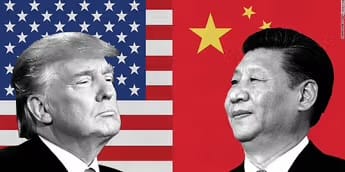
The global contest between the United States and China over critical minerals is increasingly centred on Africa, as Washington steps up efforts to secure alternative supply chains for resources vital to industry, energy transition and national security.
In early February, senior African officials and mining executives are expected in Washington for a new round of high-level discussions that underline Africa’s growing strategic importance to U.S. economic planning. The meetings come as China continues to dominate much of the continent’s extractive sector, particularly in cobalt, copper and iron ore.
U.S. policymakers are now moving beyond broad diplomatic messaging, shifting towards direct engagement with African governments and investment-focused partnerships involving American firms. Officials in Washington view access to reliable mineral supplies as essential for electric vehicles, defence manufacturing and clean energy technologies.
As part of this push, U.S. Secretary of State Marco Rubio is set to host the first-ever Critical Minerals Ministerial on 4 February. The gathering is designed to align strategies with partner countries on securing key minerals and strengthening supply chains outside China’s control. African participation is expected to feature prominently, with delegations from major resource-rich countries anticipated.
The Democratic Republic of Congo, home to some of the world’s largest cobalt and copper reserves, is positioning itself at the centre of these discussions. Congolese authorities have recently shared detailed data on national mineral reserves with U.S. counterparts, signalling a willingness to deepen cooperation under an existing minerals framework. The government has also identified state-linked assets in cobalt, copper, manganese, gold and lithium for potential foreign investment.
Kenya is also emerging as a new focal point. A recent gold discovery valued at more than $5 billion has boosted its profile at a time when Washington is looking to diversify sources of strategic minerals. Guinea, meanwhile, remains a key battleground in the rivalry, particularly after the launch of iron ore exports from the massive Simandou project to China, highlighting Beijing’s entrenched presence in Africa’s mining landscape.
Alongside diplomatic initiatives, the U.S. is coordinating with allies in Europe and Asia to reduce dependence on Chinese-controlled supply chains. Recent meetings involving finance and trade officials from several major economies focused on developing alternative sourcing strategies, with Africa identified as central to those plans.
Analysts note that Washington is increasingly favouring commercially viable, investor-ready projects over traditional aid-driven engagement. African governments able to present transparent data, stable regulatory environments and bankable assets are likely to attract greater U.S. interest as competition with China intensifies.
Despite ongoing security challenges in parts of the continent, particularly in eastern Congo, African mineral producers are moving quickly to secure a place in Washington’s evolving strategy—signalling that the U.S.–China rivalry over resources is no longer theoretical, but actively unfolding on African soil.