
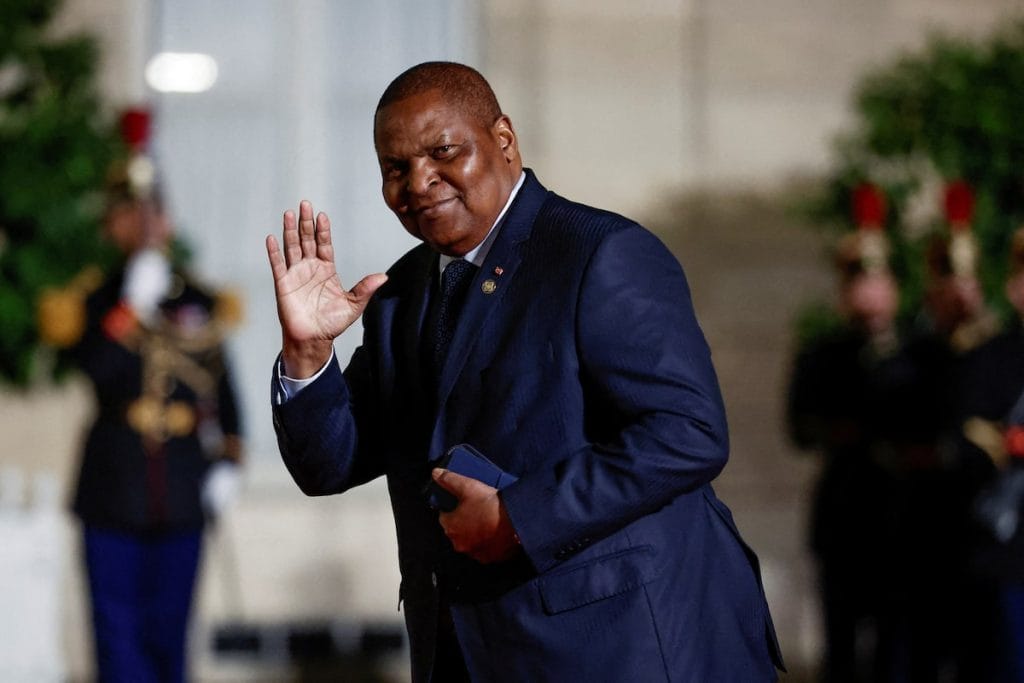
President Faustin-Archange Touadéra has been re-elected for a third term in the Central African Republic after securing 76.15 percent of the vote, according to provisional results announced on Monday by the National Elections Authority.
The vote was held following a controversial 2023 constitutional amendment that removed presidential term limits and extended the mandate to seven years. The reform enabled Touadéra, 68, to run again and was strongly opposed by the country’s main opposition groups, many of which boycotted the election.
Touadéra first came to power in 2016 and was re-elected in 2020 with 53.16 percent of the vote in the first round. This time, electoral authorities said he won by a wide margin.
Constitutional changes and security narrative
The 2023 constitutional referendum abolished term limits, a move critics described as a step backward for democracy. Touadéra’s government defended the changes as necessary for political stability in a country affected by years of conflict.
During the campaign, Touadéra emphasized security gains, arguing that cooperation with Rwandan troops and Russian-linked security forces had helped reclaim territory from armed groups and reduce large-scale violence. His administration maintains that these partnerships are essential for national security.
However, critics say the alliances have significantly increased Russia’s influence in the country, particularly in the mining sector. Russia has expanded access to strategic resources such as gold, diamonds, lithium and uranium, raising concerns among opposition figures and civil society groups about growing foreign involvement.
Opposition boycott and allegations
International observers, including the African Union and the UN Multidimensional Integrated Stabilization Mission in the Central African Republic (MINUSCA), said voting was largely peaceful despite ongoing insecurity in parts of the east.
The main opposition coalition, the Republican Bloc for the Defence of the Constitution (BRDC), boycotted the vote, arguing that conditions for a free and fair election were not in place.
Several opposition candidates who did take part, including former prime ministers Anicet-Georges Dologuélé and Henri-Marie Dondra, claimed their campaigns faced restrictions, including limitations on travel within the country. Opposition groups also raised allegations of electoral irregularities, though no widespread post-election violence has been reported.
Awaiting court validation
The Constitutional Court has until 20 January to confirm the final results or rule on any formal challenges.
Touadéra’s third-term victory further consolidates his hold on power in one of the world’s poorest countries, while renewed concerns persist over democratic backsliding, fragile peace and increasing foreign influence.