


Thousands of residents have now reached Tawila, about 80 kilometers west of El Fasher, after enduring days of walking through battle-scarred terrain without food, water, or shelter.
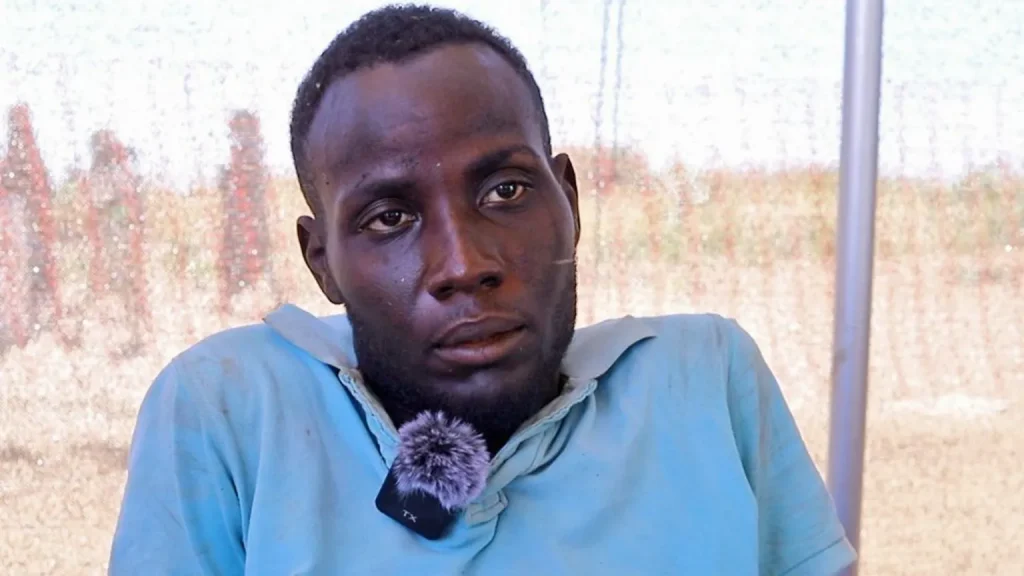
One survivor, Ezzeldin Hassan Musa, recounted how RSF fighters beat and tortured those trying to escape.
“We saw people murdered in front of us. They beat me with sticks on the head and back. They wanted to execute us completely,” he said, resting on a mat after reaching safety.
According to aid workers, most of those arriving in Tawila are women, children, and the elderly. Many of the men were targeted, detained, or executed along the way, suspected of being soldiers or affiliated with the army.
Another survivor, Ahmed Ismail Ibrahim, described how four of his companions were shot dead by RSF fighters after being stopped on their escape route.
“They killed them in front of us. I was shot three times but survived,” he said, his body covered in bandages.
In a nearby medical tent run by Médecins Sans Frontières (MSF), health workers are treating hundreds of newly displaced people suffering from wounds, infections, and malnutrition.
“Many have amputations, and most are deeply traumatized,” said Alfadil Dukhan, an MSF medic.
Yusra Ibrahim Mohamed, whose husband — a Sudanese soldier — was killed during the fighting, said she fled with her children after repeated attacks in her neighborhood.
“We saw dead bodies on the streets. People were beaten and robbed if they resisted,” she said.
Before its fall, El Fasher had been under siege for 18 months, with residents trapped between RSF artillery fire and Sudanese army bombardments, facing starvation due to aid blockades.
Aid agencies fear that only a fraction of those trapped in the city have managed to escape.
“We estimate only about 5,000 have reached Tawila, out of nearly 250,000 who were still inside El Fasher,” said Caroline Bouvoir of Solidarités International. “Many are stuck, injured, or too weak to move.”
The United Nations described the situation as “horrific,” calling for safe humanitarian corridors and immediate protection for civilians.
As one survivor pleaded:
“People are dying on the roads. Humanitarian aid must reach them — before it’s too late.”