
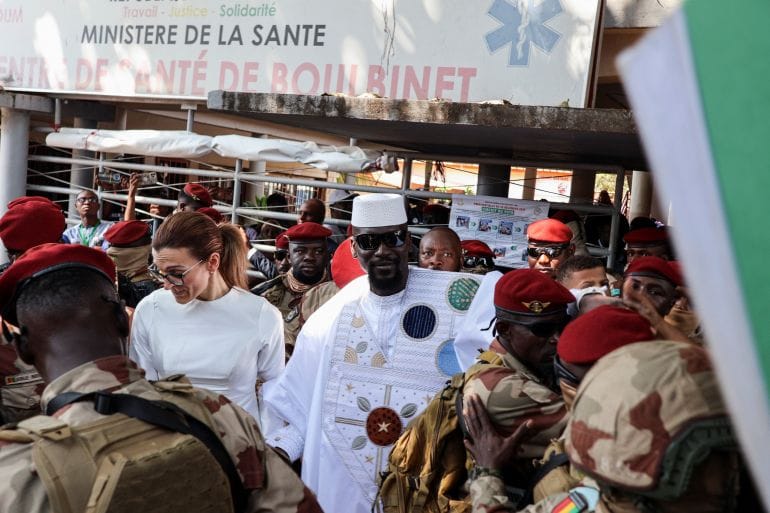
Guinea’s military ruler Mamady Doumbouya has been declared the winner of the country’s presidential election, securing a decisive victory in the first national polls since his 2021 coup.
According to provisional results announced by electoral authorities on Tuesday, Doumbouya received 86.72 percent of the vote held on 28 December, giving him an outright majority and eliminating the need for a second round. Voter turnout was reported to be just over 80 percent.
The outcome marks a significant step in Guinea’s transition process, which began when Doumbouya, then a special forces commander, removed long-time President Alpha Condé from power. While the election was presented as a return to civilian rule, critics argue it primarily served to consolidate Doumbouya’s hold on power after years of military governance.
Opposition figures have long accused the authorities of restricting political space ahead of the vote. Several prominent political leaders, including former President Condé and opposition veteran Cellou Dalein Diallo, remain in exile. International human rights organisations and UN officials expressed concern prior to the election, citing reports of constraints on campaigning, limits on press freedom, and intimidation of political activists.
The foreign ministry said the results still need to be reviewed by the Supreme Court, which has several days to confirm the outcome or consider any legal challenges.
Doumbouya previously pledged that neither he nor other junta figures would stand for office. However, constitutional changes adopted earlier this year allowed members of the military-led transition to contest the election and extended the presidential term to seven years.
Guinea remains a strategically important West African nation with vast mineral wealth, including the world’s largest bauxite reserves and the major Simandou iron ore development. Doumbouya has presented progress in the mining sector and increased state involvement in strategic industries as achievements of his administration, aligning himself with broader regional trends toward resource nationalism.
Opposition candidates have alleged irregularities in the voting process, including claims of fraud and barriers to election monitoring. As of late Tuesday, the government had not issued a detailed response to those accusations.
Regional observers and international partners are now watching closely to see whether the post-election period brings greater political openness or further entrenches military influence in Guinea’s governance.