
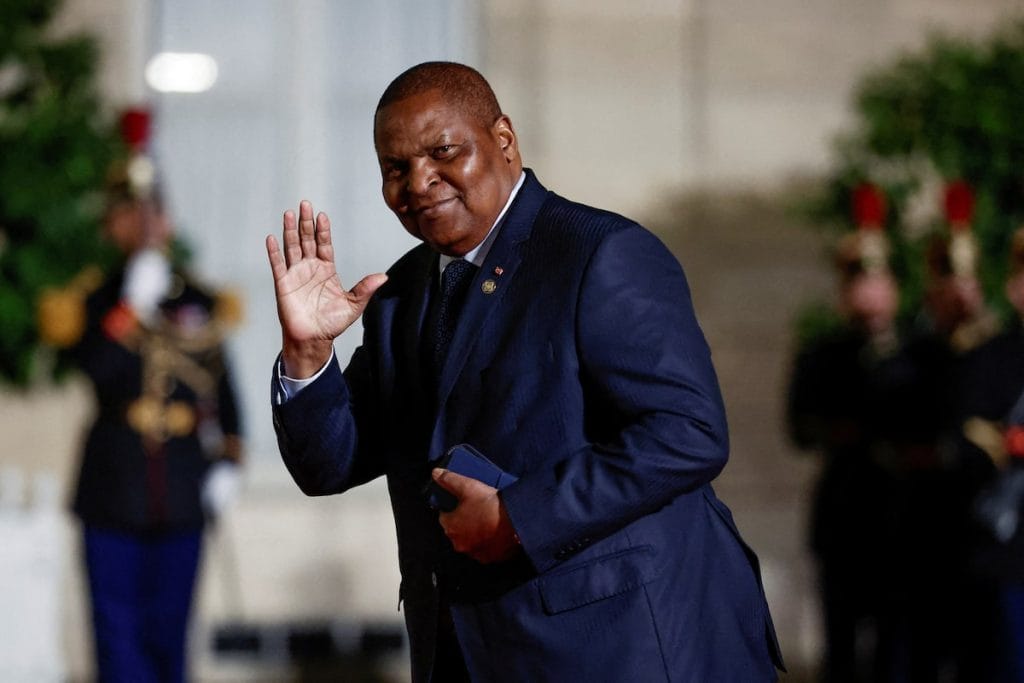
Central African Republic (CAR) President Faustin-Archange Touadéra is bidding for a controversial third term in Sunday’s election, after a decade in power marked by heavy reliance on Russian security support and bold – but risky – economic experiments.
Touadéra, 68, pushed through a 2023 constitutional referendum removing presidential term limits, clearing the way for his re-election bid. Analysts say he is strongly favored to win, backed by the advantages of incumbency, state resources, and the mobilization of public officials.
Since taking office in 2016, Touadéra has leaned heavily on external military backing to stabilize a country long scarred by conflict. CAR became the first in the region to welcome Russia’s Wagner mercenary group in 2018, a move later copied by Mali, Burkina Faso, and Niger. Rwanda also deployed troops to help secure past elections and remains present in the country.
Touadéra frequently cites improved security as his key achievement, claiming safer roads, renewed state control, and declining rebel violence. Security gains have supported modest economic growth, with the IMF estimating expansion at around 3% this year. However, analysts warn the situation remains fragile, with rebels not fully disarmed and instability spilling over from neighboring Sudan.
The president has also pursued headline-grabbing economic initiatives. In 2022, CAR became the first African nation to adopt Bitcoin as legal tender, and his government has launched cryptocurrency projects to attract foreign investors. He recently signed an agreement to introduce Starlink satellite internet in the country. Critics, however, warn of financial risks, corruption, and limited benefit to ordinary citizens, many of whom continue to face poverty and unemployment.
Despite his deep ties to Moscow, Touadéra has signaled openness to Western partners and foreign companies interested in CAR’s lithium, gold, and uranium reserves. But accusations of human rights abuses linked to Russian forces, ongoing illegal mining, and widespread insecurity continue to overshadow his governance record.
As voters head to the polls, many say their priorities are basic: peace, security, roads, and economic opportunity. Whether Touadéra’s controversial third-term bid brings stability or triggers renewed tensions remains a key concern both inside CAR and among international observers.