
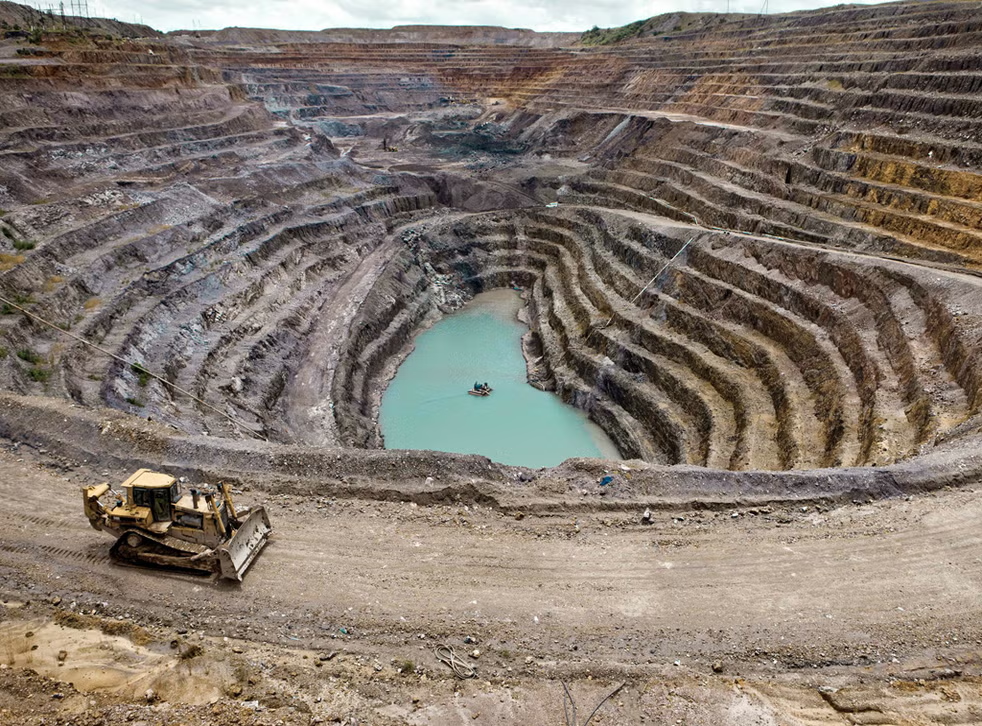
The Democratic Republic of Congo (DRC) has introduced new export conditions for cobalt, tightening state control over the strategic mineral as global demand for electric vehicle batteries grows.
Under a government circular reviewed by Reuters, cobalt exporters are now required to:
• Obtain a Quota Verification Certificate (AVQ) before shipping
• Pre-pay a 10% mining royalty within 48 hours of receiving an invoice
• Submit to joint sampling, weighing and sealing of export lots
• Undergo physical inspections by multiple state agencies
These rules took immediate effect following a joint directive issued on November 26 by the ministries of mines and finance.
Congo, which produces over 70% of the world’s cobalt, replaced a months-long export ban with a quota system in October to boost state revenues and improve oversight. However, no shipments have yet moved since the ban was lifted, as companies seek clarity on compliance requirements.
For the fourth quarter of 2025, the government has allocated 18,125 metric tons of export quotas and plans to allow 96,600 tons annually from 2026. Major shares went to China’s CMOC and Glencore, while ARECOMS held back 10% as a strategic reserve.
Industry executives warned the new system has created significant uncertainty, particularly over how the new 10% royalty will be calculated and whether it applies retroactively.
Analysts say the fast-changing rules could keep global cobalt prices volatile. Cobalt is currently trading at about $24 per pound ($52,910 per ton), up sharply from its February low following the export ban.
The DRC government says non-compliance could lead to severe penalties, including licence revocation, as it pushes to assert greater control over its mineral wealth.