
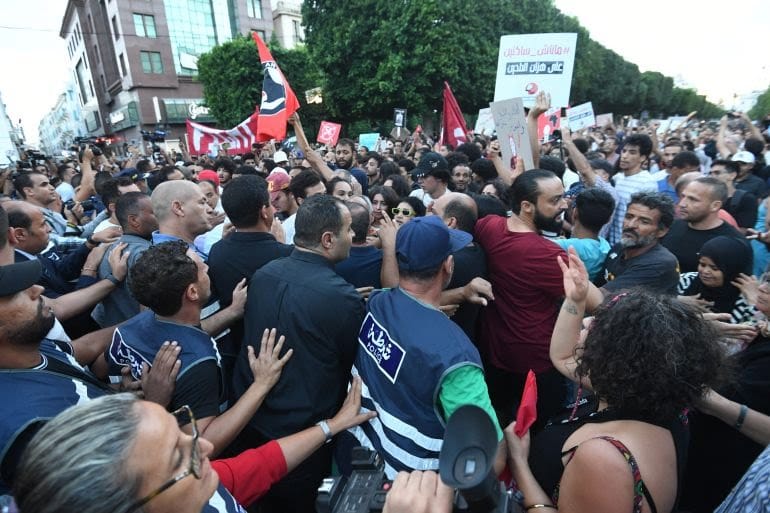
Human Rights Watch (HRW) and Amnesty International on Friday condemned what they described as a serious deterioration in civil liberties and the rule of law in Tunisia, accusing authorities of intensifying pressure on activists, opposition figures, and foreign nongovernmental organizations.
In a statement, Amnesty said Tunisian authorities have “escalated their crackdown on human rights defenders and independent NGOs through arbitrary arrests, detention, asset freezes, bank restrictions and court-ordered suspensions,” citing the government’s claims of combating “suspicious” foreign funding and protecting “national interests.”
The group said the pressure on civil society has reached an unprecedented level, noting that six NGO workers and human rights defenders from the Tunisian Council for Refugees are facing criminal prosecution in a case linked solely to their work with refugees and asylum seekers. Their trial, initially scheduled for Oct. 16, was postponed to Nov. 24.
Tunisia, once seen as the success story of the 2011 Arab Spring uprisings, has faced a sweeping political overhaul since President Kais Saied dissolved parliament in July 2021 and assumed broad executive powers. Critics accuse Saied of ruling by decree and stifling dissent following a 2022 referendum that introduced a new constitution amid low voter turnout.
Amnesty said at least 14 Tunisian and international NGOs have had their activities temporarily suspended over the past four months, including the Tunisian Association of Democratic Women and the World Organisation Against Torture.
In a separate statement, HRW said Tunisia’s Court of Appeal will on Nov. 17 hear the appeal of more than 30 defendants who were handed heavy prison sentences in April in what the organization called a politically motivated “Conspiracy Case.”
HRW said four detainees are currently on hunger strike, including one who was allegedly subjected to physical violence in prison on Nov. 11.
The defendants, who include opposition figures, lawyers, activists and researchers, were convicted on charges of “conspiracy against state security” and terrorism-related offenses under Tunisia’s Penal Code and the 2015 Counterterrorism Law. Prison terms range from four to 66 years.
HRW, which reviewed the case files, said the charges lack credible evidence and urged authorities to void the convictions and release those detained.
“This entire case has been a masquerade, from the baseless accusations to a judicial process devoid of fair trial guarantees,” said Bassam Khawaja, HRW’s deputy Middle East and North Africa director. “The authorities should end this judicial farce, which is part of a wider crackdown on any form of criticism or dissent.”
Jawhar Ben Mbarek, co-founder of the main opposition alliance, the National Salvation Front, began a hunger strike on Oct. 29 to protest what his supporters call arbitrary detention. He was sentenced to 18 years in prison on charges of conspiracy and belonging to a terrorist group.
Several opposition leaders, including Issam Chebbi of the Republican Party and Rached Ghannouchi, the 84-year-old head of the Ennahdha party, have joined hunger strikes in solidarity. Ghannouchi, already serving multiple sentences including for alleged money laundering, maintains his innocence.
HRW urged Tunisia’s international partners to pressure the authorities to halt the crackdown and ensure fair trial standards.